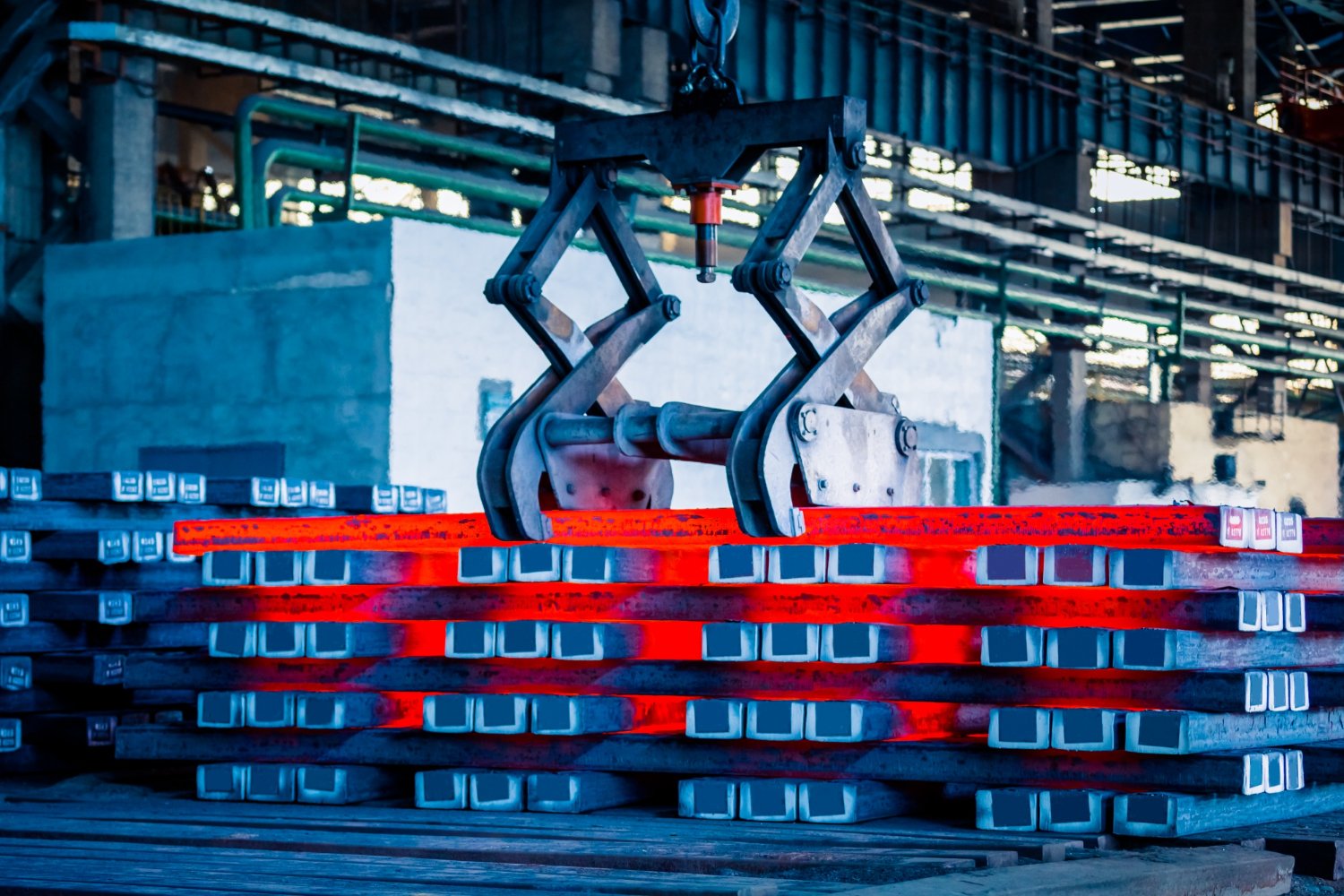
Supply Chain Planning for Steel & Metals Companies

Every Heat Is a Trade-Off. Your Scheduling System Should Know That Before the Furnace Does.

Your ERP schedules production. Oritiq schedules trade-offs, balancing batching productivity, grade-level precision, and multi-stage sequencing in every decision the furnace depends on.

Explore Our Expertise →

Founding team with 75+ years of tech-enabled supply chain transformation experience across 100+ global engagements.

Every Heat Is a Trade-Off. Your Scheduling System Should Know That Before the Furnace Does.
Steel & Metals Supply Chain Problems

Why Steel Plants Produce Below Their True Throughput.

Steel and metals manufacturing runs on batching logic: heats, rolling campaigns, and finishing sequences that must simultaneously optimise furnace utilisation, meet customer specifications, and hold delivery commitments. When scheduling can't balance all three, productivity suffers even as the plant runs full.

01

Batching for Productivity vs. Batching for Delivery

Steel plants batch multiple orders into a single heat or rolling campaign for productivity, but optimal batch composition for the furnace rarely matches optimal sequencing for customer delivery dates. The constant trade-off between maximising heat utilisation and meeting individual order commitments means one always suffers.

02

Grade and Specification Complexity Fragments Every Schedule

Customers order precise grades, thicknesses, widths, and surface finishes. A heat that produces slightly off-spec output can't be allocated to the intended order, creating surplus of one specification while another is short. Planning systems that treat "steel coil" as one SKU miss the granularity that drives every scheduling decision on the floor.

03

Multi-Stage Processing with Different Bottlenecks at Each Stage

Steel moves through melting, casting, rolling, finishing, and cutting, each with different cycle times, capacity limits, and batching logic. A productivity-optimised schedule at the melt shop doesn't automatically translate into a feasible sequence at the rolling mill. When stages are scheduled independently, WIP between them balloons and overall throughput drops.

04

Month-End Dispatch Surge Overwhelms Logistics at Tonnage Scale

The last-week dispatch skew that every industry faces hits harder in steel: tonnage volumes overwhelm weighbridges, transport capacity, and dispatch infrastructure simultaneously. The stop-start rhythm doesn't just waste plant capacity; it creates a logistics bottleneck that undoes whatever productivity the batching schedule achieved.

05

Excel-Driven Scheduling Can't Handle Batching Trade-Offs at Speed

Batching decisions involve simultaneous trade-offs between heat composition, grade compatibility, capacity utilisation, and customer delivery dates. When these are managed on spreadsheets, every schedule change triggers a manual rework too slow for the pace the plant demands.

Why Oritiq for Steel & Metals

Scheduling That Balances Batching Productivity with Delivery Precision.

Steel scheduling breaks when the batching logic that maximises furnace utilisation is disconnected from the delivery logic that meets customer commitments. Oritiq's steel supply chain management software holds both in a single scheduling pass, optimising heat composition and campaign sequencing against real order priorities and delivery windows, not against one at the expense of the other.

Batch-Aware Scheduling That Respects Both Productivity and Delivery

Most steel supply chain software schedules heats for furnace utilisation and then tries to fit customer orders around what was produced. Oritiq schedules batches with both productivity and order commitments visible simultaneously, so heat composition reflects what customers actually need, and delivery dates aren't hostage to when the furnace happens to run a compatible grade.

Batch-Aware Scheduling That Respects Both Productivity and Delivery

Multi-Stage Sequencing Across Melt, Cast, Roll, and Finish

Most steel ERP systems schedule each processing stage independently: melt shop optimised for its own throughput, rolling mill for its own, finishing for its own. Oritiq sequences across all stages in a single pass, so a productivity-optimised melt schedule translates into a feasible rolling sequence, and WIP between stages stays controlled instead of ballooning.

Multi-Stage Sequencing Across Melt, Cast, Roll, and Finish

Grade-Level Allocation Against Live Order Positions

Most metals inventory management software tracks inventory at the product level without matching specific grades, thicknesses, and finishes against individual customer orders. Oritiq allocates output at the specification level against live order positions, so off-spec production is identified and redirected immediately, and fresh heats aren't scheduled to fill orders that existing inventory could already satisfy.

Grade-Level Allocation Against Live Order Positions
Outcomes of Our Steel & Metals Supply Chain Solution

What Changes When Steel Scheduling Stops Trading Productivity for Delivery.

Across integrated steel plants, rolling mills, and specialty metals manufacturers, the same throughput and delivery improvements emerge when scheduling balances batching productivity with order precision. These outcomes come from the founding team's direct engagement with metals manufacturing operations: the same scheduling logic embedded in Oritiq.

Up to 25%
Increase in Effective Throughput

Plant output improves when batching decisions account for both furnace productivity and order requirements simultaneously, instead of optimising one and firefighting the other.

Up to 99%
OTIF to Customer

Delivery performance climbs when scheduling connects heat composition directly to customer order priorities instead of allocating after the fact.

Up to 20%
Reduction in WIP

Inter-stage WIP drops when melt, cast, roll, and finish are sequenced as one flow instead of scheduled as independent stages.

Elimination of Scheduling Rework

When batching trade-offs are resolved in the system instead of on spreadsheets, the daily manual rework cycle that consumes planning bandwidth stops being the default.

Frequently Asked Questions

Direct answers from supply chain and operations teams evaluating planning software for their industry.

Map your multi-tier supplier risk exposure
Walk through Oritiq on your BOM and ERP data
See constraint-aware scheduling on your operation
Talk to Sales Team →
Most steel scheduling systems optimise heat composition for furnace utilisation and then allocate output to orders after the fact. Oritiq schedules batches with both productivity constraints and order delivery windows visible in the same pass, so heat composition reflects real customer requirements, and delivery dates are built into the schedule, not retrofitted around it.
Yes. Most steel production planning software schedules each stage independently, which creates WIP bottlenecks between stages and throughput losses across the plant. Oritiq sequences all stages in a single scheduling pass, so what the melt shop produces is what the rolling mill can process next, and WIP stays controlled instead of accumulating between stages.
Steel order books demand allocation at the level of specific grades, thicknesses, widths, and surface finishes, not at the product level. Oritiq allocates heat output against customer orders at the specification level, so off-spec production is identified and redirected immediately, and new heats aren't scheduled to fill orders that existing inventory already covers.

Ready to Fix Your Steel & Metals Supply Chain?

Move beyond disconnected schedules and reactive firefighting. Oritiq operates as the structured decision layer your operation has been missing.

Talk to Sales Team →